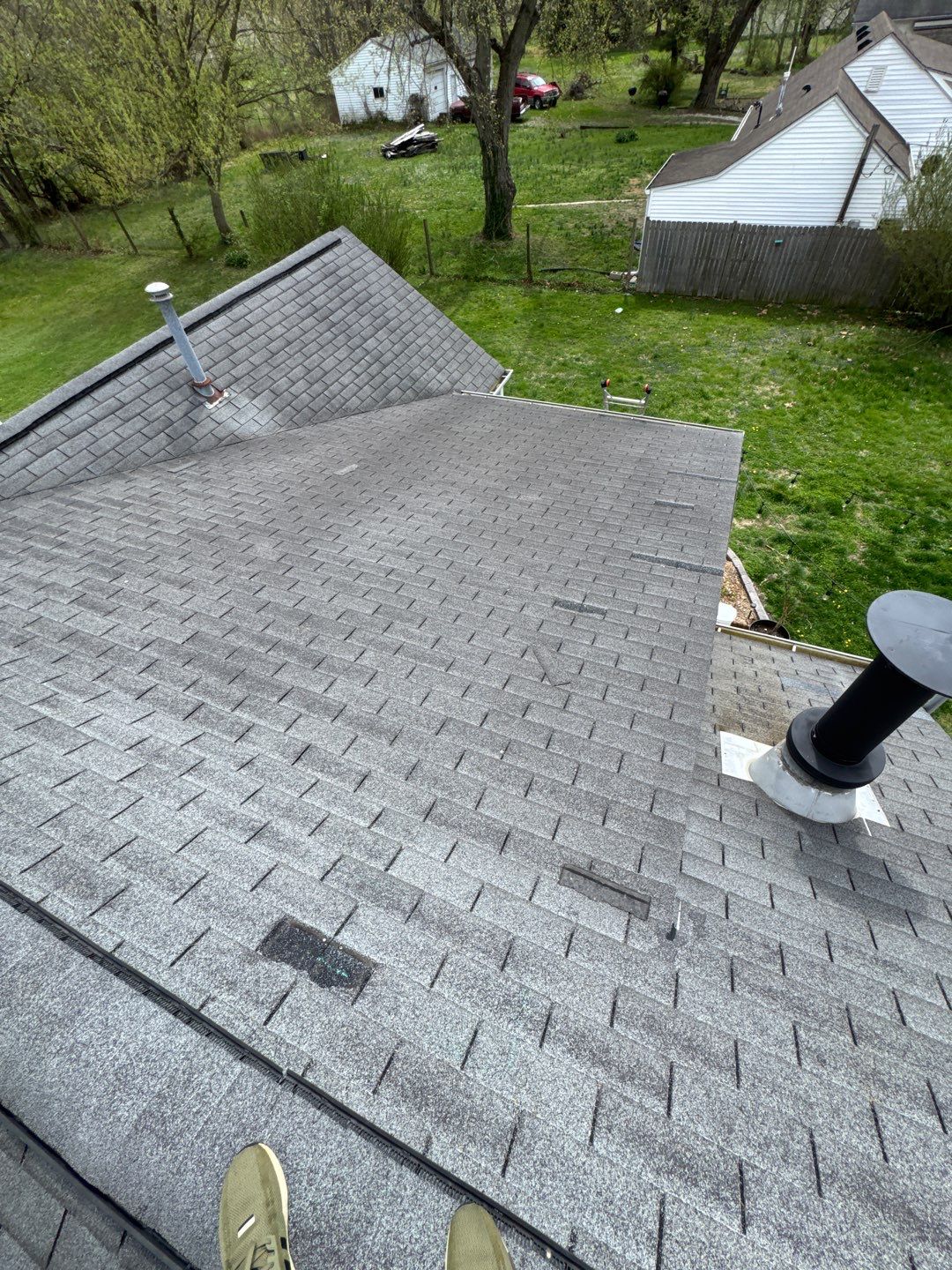
Quick Answer: Watch for These Key Signs
The clearest signs a Nineveh home needs a new roof include widely curling or cracked shingles, bald spots where the protective granules have worn away, granules collecting in the gutters, a sagging roofline, water stains on interior ceilings, daylight visible in the attic, moss or rot, and damaged flashing. The age of the roof matters too, since a roof near or past its expected lifespan deserves a close look. A single minor sign often means a repair, but several of these together, especially on an older roof, usually point to replacement. A professional inspection confirms where your roof actually stands and what it needs.
Curling or Cupping Shingles
Shingles that curl, cup, or claw at the edges are one of the most visible signs of an aging roof. As asphalt shingles get old, they dry out and lose their flat shape, with the edges turning up or the centers rising. Curling shingles no longer seal properly against wind and water, which leaves the roof vulnerable to leaks. A few curled shingles in one spot might be repairable, but widespread curling across the roof is a sign the shingles have reached the end of their life. For a Nineveh homeowner, broad curling usually signals that replacement is approaching rather than another patch.
Daylight in the Attic
One of the most telling checks a homeowner can do is to look in the attic during the day with the lights off. If you see daylight coming through the roof boards, there are gaps or holes that water can follow. While in the attic, look also for water stains on the underside of the decking, damp insulation, and any sign of moisture or mold. Daylight and stains in the attic mean the roof is compromised in ways that may not be obvious from outside. For a Nineveh home, these attic signs are important evidence, and finding them widely usually points toward replacement.
Cracked or Missing Shingles
Cracked shingles and gaps where shingles have blown off both expose the roof to water. Cracking comes from age and weather stress, while missing shingles often follow a windstorm. A handful of missing shingles in one area can sometimes be replaced, but if shingles are cracking and going missing across the whole roof, the field is failing and a repair will only buy a little time. Each gap is a potential leak point, and the underlying mat is exposed once a shingle is gone. For a Nineveh home, scattered, widespread cracking and loss is a strong sign the roof needs replacing.
Moss, Algae, and Rot
Moss and algae are common on roofs, especially in shaded, damp areas, and while light algae staining is mostly cosmetic, moss is more serious. Moss holds moisture against the shingles, which can work under them and accelerate deterioration, and in time that trapped moisture leads to rot. A little moss can sometimes be treated, but heavy moss growth on an aging roof, particularly alongside soft or rotting areas, signals the roof is breaking down. For a Nineveh homeowner in a humid climate, persistent moss combined with other signs of wear is a reason to have the roof evaluated for replacement rather than just cleaned.
Repeated Repairs and Multiple Leaks
One of the most practical signs that a roof is done is that you keep having to fix it. A roof that needs repair after repair, or that develops leaks in several different spots, is telling you the underlying roofing has worn out. At some point, continuing to patch an old roof costs more than replacing it, since each new leak is rarely the last. When repairs become frequent and the problems are spreading rather than isolated, the math shifts toward replacement. For a Nineveh homeowner tired of recurring roof problems, the pattern of repeated repairs is often the clearest signal that it is time for a new roof.
When to Act
Recognizing the signs is only useful if you act on them. A single minor sign, like a few missing shingles or one small stain, usually calls for a repair. But several signs together, especially on a roof near the end of its expected life, point toward replacement, and waiting only lets water damage the decking, insulation, and interior. The smart move is to have a professional inspection when you notice these signs, so you learn whether a repair will hold or whether replacement is the better investment. For a Nineveh homeowner, acting early turns a looming emergency into a planned, manageable project.
Damaged Flashing
Flashing is the metal that seals the roof at its most vulnerable points, around chimneys, vents, skylights, and in the valleys. When flashing is cracked, rusted, lifted, or poorly sealed, water gets in at these joints, which are among the most common sources of roof leaks. Damaged flashing on an otherwise sound roof can often be repaired or replaced on its own. But failing flashing across an older roof, alongside worn shingles, is part of the broader picture of a roof at the end of its life. For a Nineveh home, the condition of the flashing is an important part of judging whether to repair or replace.
A Sagging Roofline
A roof should follow straight, even lines. If the roofline dips, sags, or looks wavy, that points to a structural problem underneath, often water-damaged decking or, in serious cases, weakened framing. Sagging is one of the more urgent signs, because it indicates the problem has moved beyond the surface shingles into the structure of the roof. This is not something to monitor casually. For a Nineveh homeowner, a visibly sagging roofline warrants a prompt professional inspection, since it usually means moisture has compromised the wood and a replacement, including decking repair, is likely needed to make the roof sound again.
Granule Loss and Bald Spots
Asphalt shingles are coated with protective granules that shield them from the sun and weather. As shingles age, they shed these granules, which show up in the gutters and as bald spots on the roof where the darker asphalt underneath is exposed. Some granule loss is normal, especially on a newer roof, but heavy shedding and visible bald patches mean the shingles are wearing out and aging faster, since the exposed asphalt degrades quickly in the sun. For a Nineveh homeowner, finding gutters full of granules on an older roof is one of the more reliable signs that replacement is on the horizon.
The Age of Your Roof
Age is a major factor in whether a roof needs replacing. Most asphalt roofs last somewhere in the range of twenty to thirty years depending on the shingle type, with three-tab on the shorter end and architectural on the longer. A roof approaching or past that range deserves a close look even if it appears acceptable from the ground, since wear that is not visible can still be present. Knowing your roof's age and comparing it against its expected lifespan gives important context for every other sign. For a Nineveh homeowner, an old roof showing any of the wear signs above is a strong candidate for replacement.
Water Stains and Interior Leaks
Some of the clearest signs of a failing roof appear inside the home. Brown or yellow water stains on ceilings or upper walls mean water is getting past the roof, and active drips during rain confirm it. A single stain might trace to an isolated flashing or shingle issue that can be repaired, but stains in multiple rooms or recurring leaks suggest the roof is failing more broadly. Water that reaches the interior has already passed through the roofing and decking, so interior signs mean the problem is well established. For a Nineveh homeowner, multiple interior leaks often indicate a replacement rather than a patch.